
In a world driven by innovation and technology, introducing STEM (Science, Technology, Engineering, and Mathematics) to children at an early age has become more important than ever. But when we think of STEM, we often picture older students in lab coats or coding on computers. What if we told you that STEM for preschoolers is not only possible but also fun, engaging, and highly beneficial for their cognitive development?
Parents and teachers play a crucial role in laying this foundation. You don’t need fancy equipment, a science lab, or advanced degrees to bring the magic of STEM into your living room or classroom. With a few household items and a pinch of curiosity, you can ignite your little one’s imagination and critical thinking skills right at home.
This blog will walk you through easy science experiments for toddlers, provide insight into why these activities are crucial, and show how they align with early learning milestones. We will also highlight two high-competition keywords—“STEM activities for kids” and “science experiments for kids”—and two low-competition long-tail keywords—“preschool STEM activities at home” and “easy science experiments for toddlers”—to help you find the best resources for your child’s STEM journey.

Why STEM for Tiny Tots Matters
STEM might sound complex for a three-year-old, but the basic principles—observing, asking questions, predicting outcomes—are innate in children. When toddlers pour water from one cup to another or stack blocks to build towers, they are engaging in early STEM behavior.
Here’s why STEM for preschoolers is essential:
- Prepares them for school: Early exposure helps bridge the gap between play-based learning and formal education.
- Enhances problem-solving skills: Activities that involve trial and error teach patience and resilience.
- Encourages creativity and innovation: Children learn to approach problems with out-of-the-box thinking.
- Boosts motor skills and coordination: Many STEM activities require fine motor skills, like pouring, measuring, or mixing.
- Introduces scientific vocabulary: Kids become familiar with concepts like floating, sinking, magnets, and reactions.

Tips for Doing STEM Activities with Young Children
- Before diving into the actual experiments, it’s important to set the stage:
- Keep it simple: Choose activities that require minimal materials and preparation.
- Allow mess: Science is often messy. Use aprons or old clothes and protect surfaces with newspapers or trays.
- Ask open-ended questions: “What do you think will happen?” or “Why do you think that happened?”
- Emphasize the process, not the result: Focus on exploration rather than perfection.
- Repeat activities: Repetition helps children notice patterns and retain concepts.
- Make it playful: Integrate storytelling, songs, or characters to make science relatable
Simple Science Experiments You Can Do at Home
Here are 6 preschool STEM activities at home that are safe, easy, and highly engaging.
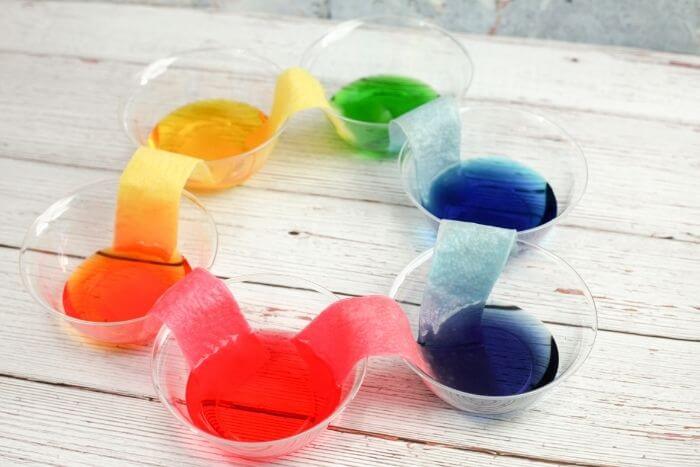
1. Rainbow Walking Water
- Concept: Capillary Action and Color Mixing
- Materials: 6 clear cups, paper towels, food coloring (red, yellow, blue), water
- Instructions:
- Fill 3 cups with water and add red, yellow, and blue food coloring to each.
- Arrange the cups in a circle, alternating colored water and empty cups.
- Fold paper towels and place them between each cup, forming bridges.
- Watch as the colored water “walks” through the paper towels and mixes in the empty cups.
- Learning Outcome: Children see how water travels and how colors mix to create new ones.
2.Baking Soda and Vinegar Volcano
Concept: Chemical Reactions
Materials: Baking soda, vinegar, food coloring, a container or toy volcano
Instructions:
- Fill the volcano or container with baking soda.
- Add a few drops of food coloring.
- Pour vinegar over it and watch it erupt!
Learning Outcome: Demonstrates the reaction between an acid and a base, creating carbon

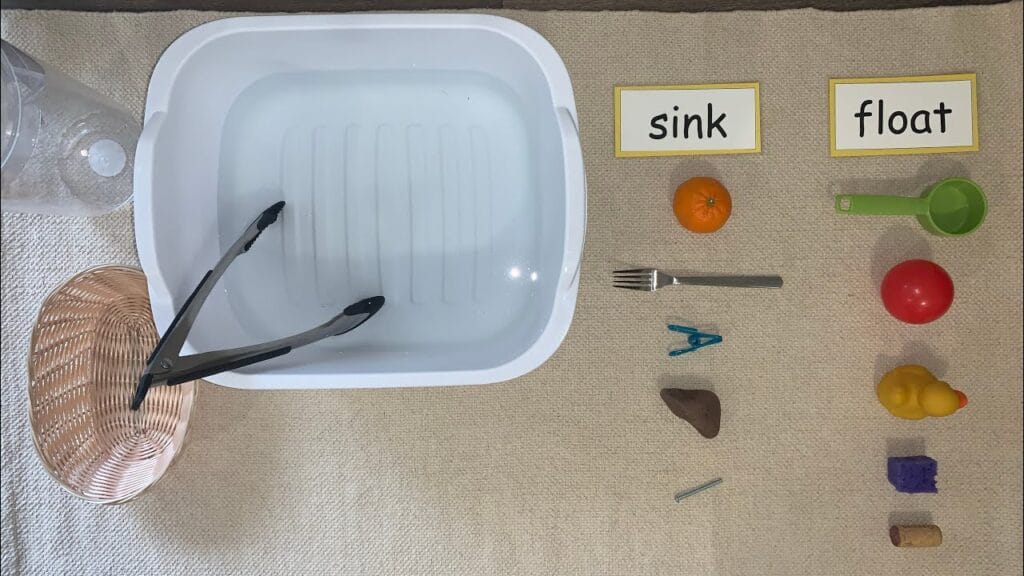
3.Sink or Float Experiment
- Concept: Density and Buoyancy
- Materials: Large bowl of water, various household objects (spoon, leaf, plastic toy, coin, sponge)
- Instructions:
- Ask the child to guess whether each item will sink or float.
- Test the predictions one by one.
- Learning Outcome: Encourages observation, hypothesis, and conclusion—essential components of the scientific method.
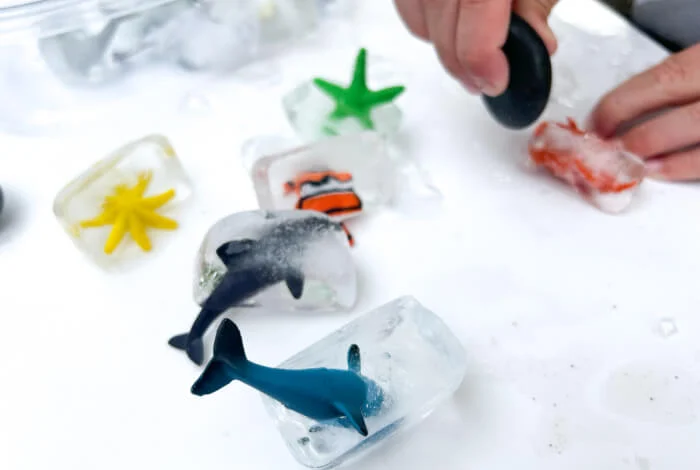
4.Ice Excavation Sensory Play
Concept: States of Matter and Temperature Awareness
Materials: Small toys, plastic container, water, freezer, salt, warm water, pipette or spoon
Instructions:
- Let kids use tools to free their treasures.
- Freeze small toys inside a container of water.
- Once frozen, provide salt and warm water to help “excavate” the toys.
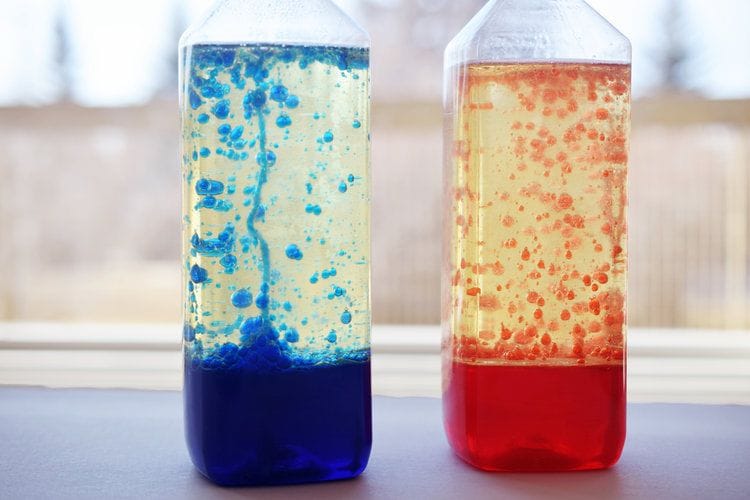
5. DIY Lava Lamp
- Concept: Density and Chemical Reactions
- Materials: Clear bottle, water, vegetable oil, food coloring, Alka-Seltzer tablet
- Instructions:
- Fill the bottle with 1/4 water and 3/4 oil.
- Add food coloring.
- Drop in pieces of Alka-Seltzer and watch the bubbling action.
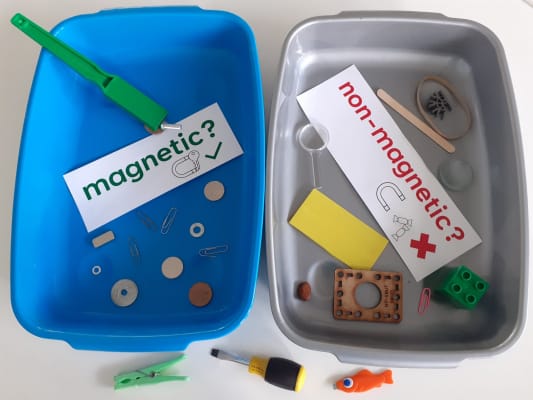
6. Magnetic or Non-Magnetic Sort
Concept: Magnetism
Materials: Magnet wand, metal and non-metal items (paperclip, coin, rubber band, button)
Instructions:
- Ask your child to test each with a magnet and sort them accordingly.
Integrating STEM into Daily Routines
You don’t need a formal experiment every day. STEM can easily be incorporated into everyday moments:
- Gardening: Observe plant growth and learn responsibility.
- Bath time: Explore which toys float or sink.
- Cooking: Count, measure, observe changes in ingredients.
- Nature walks: Collect leaves, rocks, or observe insects.
- Building forts: Learn about structure and balance.
Safety Tips for STEM with Toddlers
- Always supervise—never leave children unattended with small or breakable items.
- Use non-toxic materials only.
- Avoid choking hazards—especially with younger toddlers.
- Teach basic safety habits: not tasting materials, washing hands after, etc.
Best Resources for Parents and Teachers
If you’re looking for more structured guides, here are some helpful platforms:
- KiwiCo – Offers science kits by age group.
- PBS Kids – STEM games and videos for preschoolers.
- STEAM Powered Family – Blog with tons of DIY STEM project ideas.
- Pinterest – Search “science experiments for kids” for endless inspiration.
National Geographic Kids – Videos, games, and experiments suitable for young learners
Conclusion: The Joy of Curiosity
Incorporating STEM into the lives of toddlers and preschoolers is not about mastering equations or engineering complex machines. It is about cultivating a sense of wonder, encouraging curiosity, and allowing space for discovery. With simple science experiments for toddlers, you are not just keeping them engaged—you are helping them develop critical thinking, observational skills, and confidence to ask “why?”
As a parent or teacher, you are their first guide into a world of infinite possibility. All it takes is a bit of time, everyday materials, and the willingness to explore alongside them. So, roll up your sleeves, embrace the mess, and spark that early love for science—one simple